Let me start by admitting that this blog is a social experiment to see how long people take to ask me “what the fuck?” (I am kidding)

(seriously though, I am always a bit of chaos. Nothing out of the ordinary, though admittedly a bit sick and depressed at the moment. Thank you and all the love for caring y’all. Love you all 😉 )
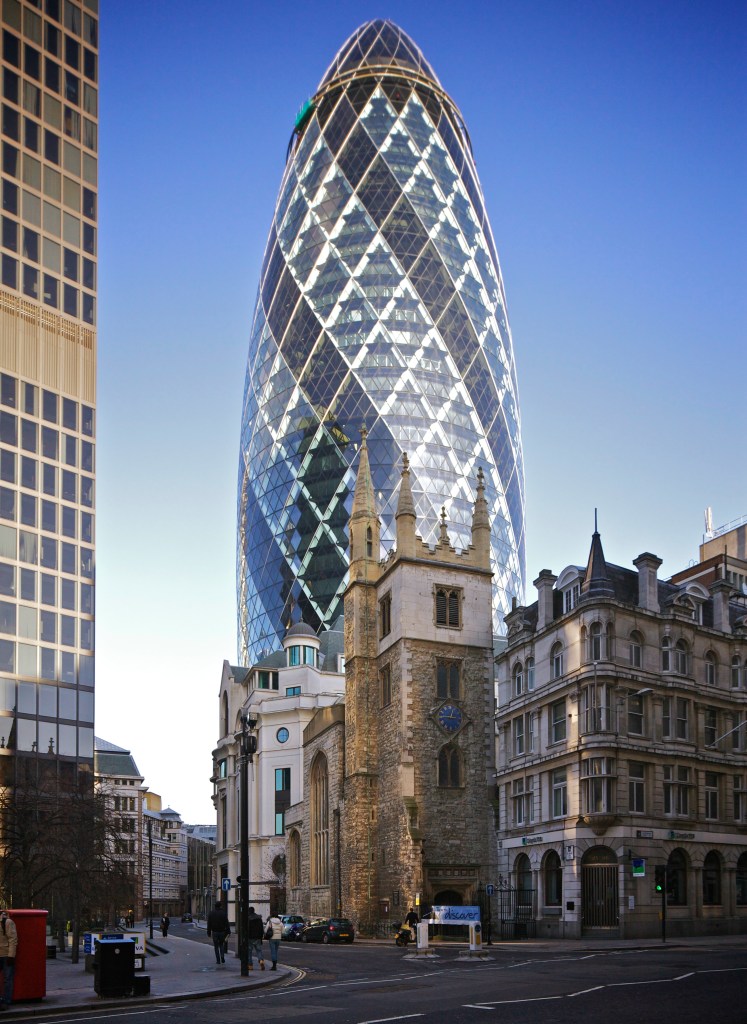
Now, on to the other stuff: At some point in my life, I was doing my PhD and being an all around useless student (I spent most of my office computer hours watching Game of Thrones and Gossip Girl; this is not to say I did not work, but I usually cannot sit in an office chair and work. I paced around outside. Honestly I feel most time was wasted because I was anxious about seeming to work and ending up watching series rather than going out and thinking my own way), my advisor PhD Günter Ziegler and I looked at a gherkin and said: this is going to make a fine math paper. Anyway, tonight I was visited by three ghosts, and they told me a tale.
First, the past. If I remember correctly, it was a dark December night in Berlin, he called me to his office and we sat by the fire, a black cat on his meowing at the crystal ball. I threw a few eyeballs of freshly slaughtered children, as well as some entrails of newt, into the cauldron and recited the necronomicon after Steinitz, as it was custom at the time.
That is not planar which cannot polytope be.
And with strange 3-connectedness even lifting I see
The grandmaster (as we used to call our academic advisors at the time) pushed back the hood of his robe, ordered his hunchbacked, toadfaced assistant to bring us coffee made from celestial dew, and explained:
As king in yellow did declare
projective uniqueness in most bare
must be finite
in Carcosa.
I should elaborate on that here. You see, the king in yellow refers to Legendre. And Carcosa refers to any fixed dimension. Hence, you see, Legendre, in his prophetic “Elements of Geometry”, had essentially written down a formula for the dimension of realization space of polytopes, and it would imply that there are only finitely many projectively unique polytopes (polytopes such that any two realizations are related by a projective transformation).
We nodded, for the king in yellow did declare. Suddenly, though, a lighting struck the nearby tree, and we saw in front of our eyes this very building. The gherkin. For you see, distances do not matter in the land of Mnar. And it became then that the unknowable became knowable, and that the king had tricked us. For you see, you have to think of it like this.
Consider the standard cube tesselation of 
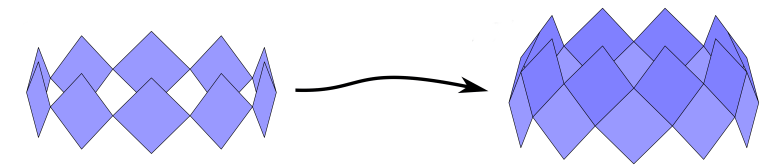
Now this is nothing out of the ordinary, but if n is at least 3, then, every new layer of vertices is uniquely determined by it’s combinatorial type. We realized we could use this to construct an infinite number of projectively unique polytopes in Lost Carcosa every fixed dimension. All cool, we could stop sacrificing virgins. A relief, because the bodycount was going up and all the blood was causing a lot of mold (incidentally, Lovecraft always feels a little moldy to me).
Now to the present: Misha Gromov recently uploaded a marvelous paper in which he proves bounds that every sufficiently “combinatorially round” polytope (which he defines as having a combinatorial map to the cube) must be “geometrically round” (the dihedral angles, angles between facets, must be big).
He did this without invoking an old god (I think), but by using comparison theorems in geometry (the combinatorial roundness just gives him sufficient spaces for geometric constructions, such as doubling). He also asked me at some point whether the “combinatorially round” assumption is necessary, or every sufficiently big polytope has to have big dihedral angles (close to 



The ghost of the future was a little more funky, and I will focus on it only briefly. Let me ask a question, in addition to the ones that Misha (the mathematician, not the cat) in his paper:
Problem What is the tight lower bound on the dihedral angle in a sufficiently large d-polytope?
Edit: Ok let me add a second question:
Problem Give a discrete (that is, polyhedral) proof of Gromov’s theorem.
 For a cup of coffee more