Teaching in the Spring, CAGe and more

Firstly, for a while now, Harald Helfgott, Vasiliki Petrotou, Arina Voorhaar and myself have been organizing CAGe, a bimonthly (the bimonthly that happens roughly every 6 weeks) miniworkshop at IMJ in Paris. The idea was to have this instead of a seminar so that the visiting speakers could also have interesting talks to join, and so that there would be more of a theme each time. Next time is March 4, with Evita Nestoridi, Carsten Peterson and Jacinta Torres. Enjoy and join!

Secondly, after settling down at IMJ and getting a couch and carpet for my office, I will be teaching a course with Harald in the spring, on spectral graph theory. Find it here.

Continue reading

De Rham but not de Rham: (mixed) volumes for semigroup algebras and more!

Wanna hear a cool thing we realized while exploring lattice polytopes, but that took us much further?

So you know how in a smooth manifold, we can think of the fundamental class by integration over the manifold; that’s just de Rham cohomology of course, and we come to think of the fundamental class as something related to volumes and measures. This beautiful picture is something very geometric, in the end, one might think.

Continue reading

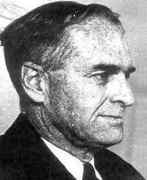
On Bing’s theorem and its applications

I want to say a word about a theorem of Bing, and a consequence I am sure he knew, and I thought everyone knew, so I just assumed it often in talks and papers (I do this often, unfortunately).

I did this several times, until a prominent mathematician said, during a colloquium in Paris, angrily that this could not be true. So maybe it is less folklore than I thought.

Anyway, to the theorem: Bing proved that if a simplicial complex X embeds facewise linearly into a PL manifold M, then M has a triangulation that contains X as a subcomplex. That seems believable, and is not so hard to prove, and contained in R. H. Bing, The geometric topology of 3-manifolds, AMS, 1983.

Now the corollary that people have problems with is this: If X embeds piecewise linearly into a PL manifold M, then M has a triangulation that contains X as a subcomplex.

That is a bit counterintuitive, as the map may be rather wild, and locally not flat. In fact, the theorem requires that we deform the map a little. But it is true nevertheless, and it is what Zuzana Patáková and I proved.

Continue reading

Stellar refinements and the Oda and Alexander conjectures

One of the fundamental results of PL topology on one hand, and the algebraic geometry of toric varieties on the other, is that any map in the respective categories (PL homeomorphism on the one hand, and birational map on the other) can be factorized into elementary moves: A PL topologist would call these stellar subdivisions, the operation of picking a point in a simplex of the polyhedron, and forcefully subdividing it by coning over the boundary of its neighborhood. And their inverses.

An algebraic geometer knows these operations as blowups and blowdowns.

Unfortunately, the result is quite messy. One has to go up and down a lot, alternating between both operations.

For this reason, two of the pioneers of the respective areas, Tadao Oda and James Alexander, asked independently whether one can simplify the zig and zag of these operations: Is it true that we can put all stellar subdivisions/blowups first, and only then do the inverses/blowdowns.

In other words, is there a common stellar refinement of both? To me, this question always held fascination due to its simplicity. More than that, however, it was introduced to me by a dear friend, Frank Lutz, who passed away recently. I will write a bit more on the subject in the next days. In the meantime, you can grab the preprint here.

Continue reading

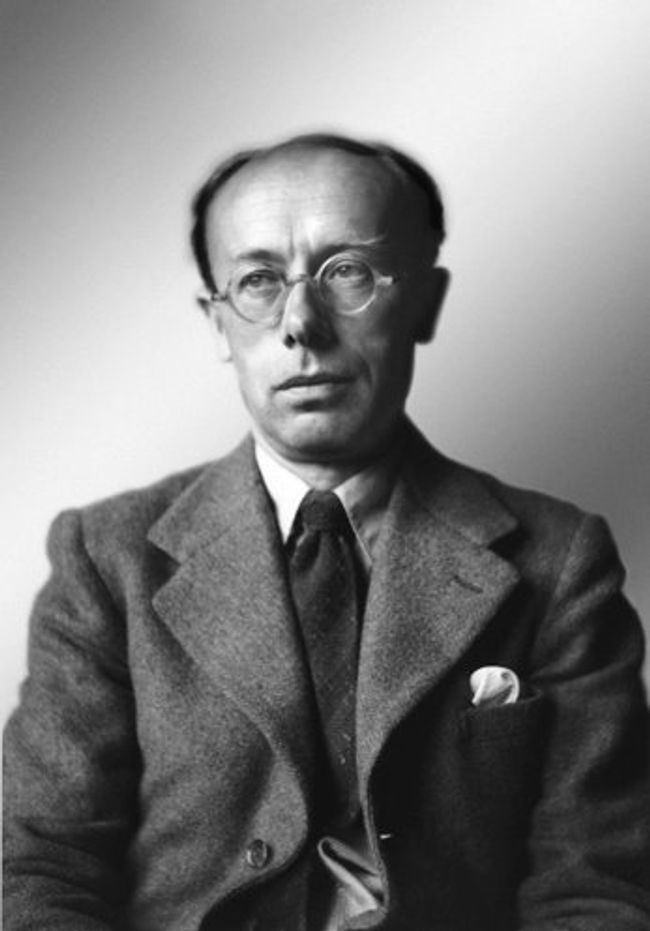
Frank Hagen Lutz (1968 – 2023)

I was sad to learn that my friend, coauthor and academic brother Frank Lutz passed away a few days ago, way too soon. You can see the announcement here. I want to write a bit about his mathematics here, away from just going over his CV.

What impresses me most in scientist, and what in my eyes distinguishes a good scientist from a great one beyond talent, I think it vision and perseverance. This may not always be a mark of success, as the vision may not be a popular one. But a vision and a perseverance to pursue it carries a voice and legacy beyond simple popularity.

Frank was such a mathematician. His vision was explicitness, concreteness of construction. His desire was to give any paradoxical, any counterintuitive phenomenon to a clear-cut example. His main fascination then was with topological spaces, and combinatorial properties. His desire was to give other mathematicians clear examples and constructions to refer to, to manipulate, to experiment with.

He constructed explicit models of the Poincaré homology sphere with Anders Björner, discussed the practical aspects of sphere recognition with Michael Joswig, Davide Lofano, and Mimi Tsuruga (the latter two were his students) and described randomized algorithms to find Morse functions with Bruno Benedetti, among many other results.

He was also a main contributor to the electronic repository eg-models, a collection of concrete examples for a variety of phenomena in combinatorial topology.

And he never stopped until he had found the most transparent solution. I remember that over months, he pestered me to explain the construction of a collapsible manifold that is not a ball. I am not the most patient person, and often rebuffed him quite rudely when I thought my answer should make it obvious. But he wanted every single move of the collapse, on paper, to check… and despite me being quite rude and impatient (an issue I try to deal with) he persevered and, over several meetings he made me have with him, extracted an answer that made him happy.

His commitment to his vision was simply awe-inspiring. I will miss him.