What I (also) talk about when I talk about struggling

In reference to some recent posts like this and nightlong discussions with Dasha Poliakova, I wanted to clarify a metapoint of why I actually made the post. And there is a point besides the point of me actually struggling, or me dying to those Rune Bears or difficult exploration projects.

It is that I am aware that I am, even if a strange person, in a position of power. And as such, people look up to someone like me, whether it is with hate or admiration. I additionally have some power over my employees, what happens in my field etc. I certainly don’t feel that way, but I understand that I can be intimidating.

Hence talking about struggling is not actually only talking about struggling. It is also serves a higher objective, in that it shows it is okay to struggle, and it is ok to talk to me about struggling. I think the former is just evidently good, the latter is more subtle. But I have made the experience (on myself and others) that a struggling person in your care is still very capable of hiding, of subterfuge and of distraction, wasting much more of their time on trying to distract you with presents or niceties you than on getting better. Hence, you (as a person encountering someone struggling) may not notice anything, or think everything is fine. Especially if they are scared of you, because they perceive you as authority (even if you feel just as small yourself).

I do not make up a struggle, and you should not either. You do not have to emulate the specific struggles of your students. It can be something as simple to admitting you are struggling to understand a paper today, or have trouble figuring out a problem (not that not understanding that paper is entirely your fault). It shows those around you and under your care that you have experience with it.

And again, there is a metapoint to this post: if you are in a position of power, if you have people under your care, this might be something for you to consider. Plus you can do it from bed at 5pm while frustrasted and laying down a paper about analytic torsion (or just still snuggling).

I am failing most of the time (or: ideas are better than solutions)

Recently, I asked two of my students/postdocs what they were working on. One answered, when referring to a paper we discussed together, that

“My brain is burning, melting, and hurting after day 1 of acquaintance with xxx, but it’s a really beautiful thing. Still need to play with examples to understand things better (xxx), but what a way to do induction, omg!”

which, you know, is the thing you want to hear. The second answered that he had an idea for an old conjecture that many people had been working on, essentially since the inception of the field..

I said ok (sceptically).

He told me the idea.

And suddenly it seemed possible.

Like all of a sudden you see the mountaintop in the distance, and see the real possibility of scaling it. While I will not spoiler on whether it works, I should say that this is the moment I love. Not the solution, not the feeling of being done (honestly that lasts a second, and is kind of disappointing when it is over) it is the idea I love. The moment that something goes from “impossible” to “maybe”.

And even just maybe. Most of the time, that fails. Even in the area I am supposed to be expert in, it is at least 90 percent failure. But I love the trying part, the idea part still. Not only because it leads to a solution, but because going from impossible to possible is a huge step. And you kind of owe it to the idea to try it. Because how else do you know it is worth it.

Cute monsters in the lower left corner by Titian

Inspiration in abstract science, metric spaces of metric spaces and stability of numerical algorithms

Two revelations from yesterday. First, my anonymous friend M (don’t want them to get pestered with inquiries yet) gave me a draft of a novel so delightfully full of cool ideas that I could not reading even as I was driven along a serpentine mountain road. The revelation, apart from the obvious conviction of their genius, was that my stomach could not handle it and I felt like hurling the contents of a fine dinner over the beautiful scenery. Though really I should have known that from experience. Sidepoint: we are watching DEVS nos, which apart from hammering metaphors in with a sledgehammer, is not bad.

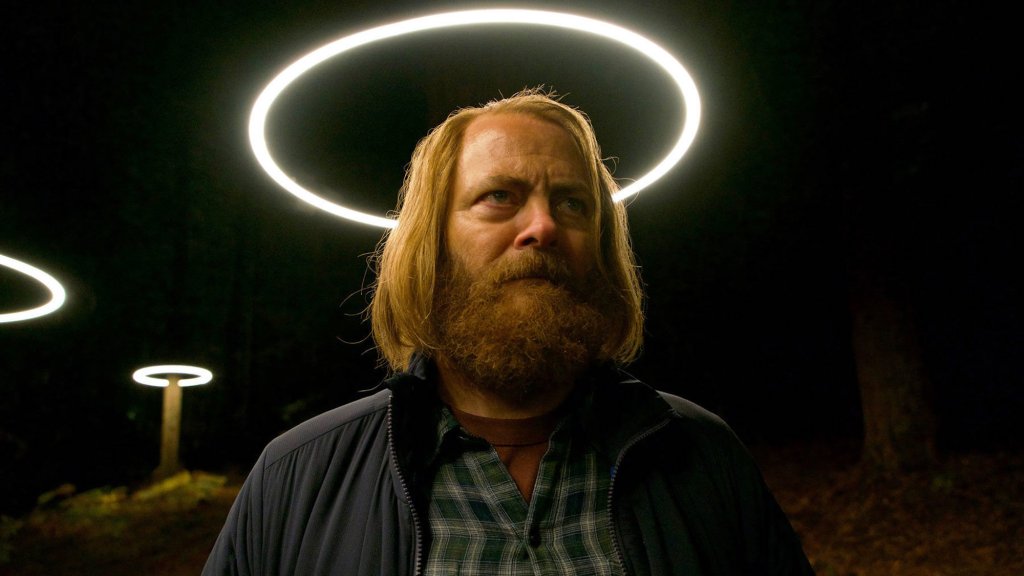
Nick gets it.

Second was that I kept thinking about a friendly interrogation that Stephen Yang of this post conducted on me, asking me to what extent we incorporate the real world experience in abstract science, or whether we are completely removed from it. (I also invited him to Jerusalem almost immediately, looking forward to your visit!)

I had two immediate answers for him: One is indirect, in that nature (in the sense of everything not inside the mind, so maybe the outside world would be a better term), at least for me, acts as cleaning current, flushing out the noise of repetitive thoughts that accumulate in creative thinking by overwhelming the senses.

Continue reading

Heart issues, cats and Richard Stanley (unrelated)

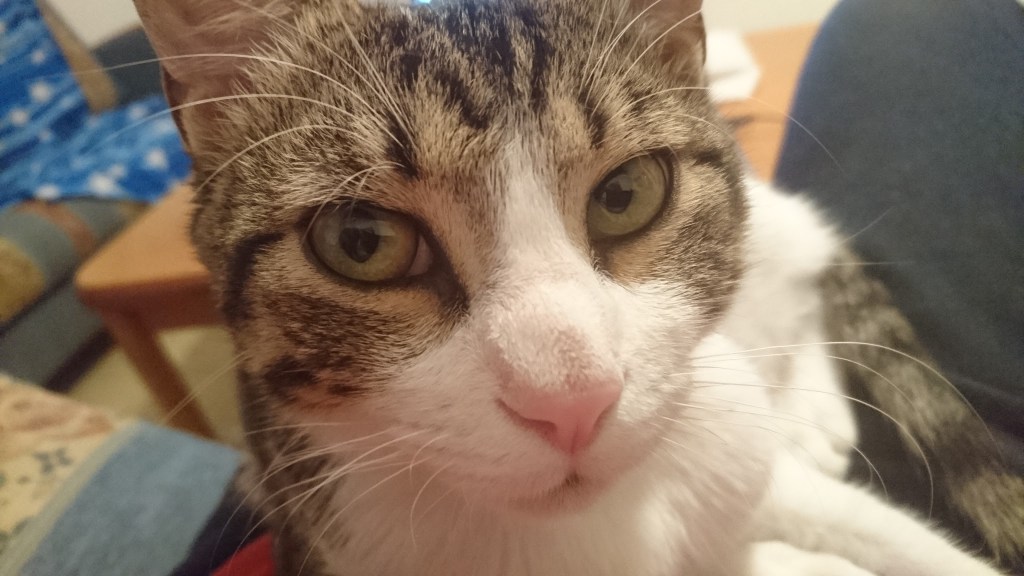
Since there were some questions as to what happened to the cat this blog is so proudly presenting in its sidebar: He died of a congenital heart defect (a flaw cat and catdad share) that we discovered too late. So I spent two weeks in summer trying to keep his lungs to fill with fluid until I had to free him of his pain.

On a lighter note, Richard Stanley gave an interview and mentioned me solving one of his favorite problems. Yay!

Misha’s gravestone, designed by my sister Ira Adiprasito