Hauptvermutung, Tietze’s dream and the importance of checking your references

Recently, we got back several referee reports for this paper here which were quite positive (well, the comments were “the construction is genius and it works, but the exposition is quite messy”; I choose to take it as a compliment), which made me very happy because it is a very classical conjecture with some nice implications. And seeing people who took their time to understand the construction (and wade through my horrible writing, because the “messy” is certainly my fault) made me quite proud…

Speaking of, though, classical conjecture…. well one part was Oda’s. That was fine. The other conjecture we solved was “Alexander’s conjecture”, named after James Waddell Alexander. Everyone kept calling it that, and Alexander certainly worked on related problems and proved something weaker in a 1930 paper (building on work of Max Newman, who, another cool fact, is best known for becoming a codebreaker later).
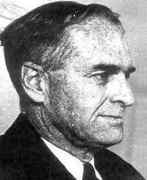
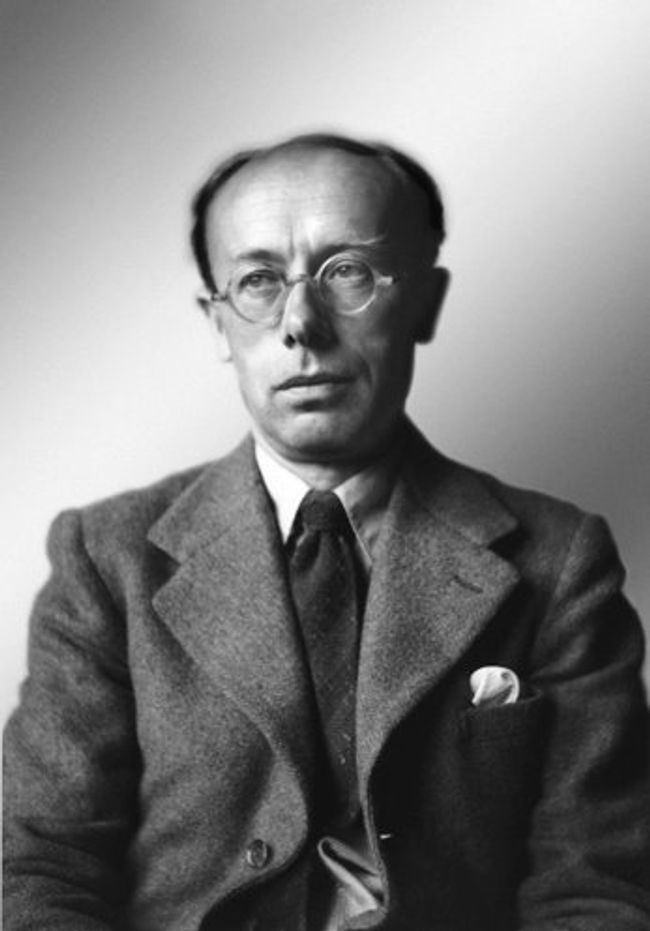
Except, one referee correctly pointed out that there seems to be no indication Alexander ever formulated it (other than people calling it that). I could not find an original reference either. For reference, the conjecture, now theorem, is

Theorem (joint with Igor Pak) Two PL homeomorphic complexes, that is, two complexes that have a common subdivision, have a common stellar subdivision (that is, a common subdivision that can be reached by certain elementary and local moves).

Instead, the conjecture seems to be older, and goes back to the beginning of the Hauptvermutung. A reminder: in 1908, Steinitz and Tietze formulated this conjecture, which shaped topology for decades until it crumbled, beginning with a counterexample by Milnor in 1961. The conjecture was

Hauptvermutung Every two homeomorphic polyhedral spaces/manifolds are PL homeomorphic, that is, they have a common subdivision.

Except, Tietze wanted more: He writes in his original manuscript (Über die topologischen Invarianten mehrdimensionaler Mannigfaltigkeiten), english version here, that he wants this subdivision to be reached by elementary moves.

“daß man durch [elementare] Unterteilung aus dem einen Schema ein Schema gewinnen kann das sich auch aus dem zweiten Schema durch Unterteilung erhalten läßt”

Indeed, Tietze, who also introduced the eponymous “Tietze transformations” in the same paper, seems to have been interested in using elementary moves to understand a complex topological or algebraic relation. And with good reason, perhaps. After the Hauptvermutung was squashed, it still remained of Tietze’s idea that, perhaps if one has two complexes that are PL homeomorphic, then they are by the a elementary common subdivision (our Alexander’s conjecture, now theorem). Why is that nice? Well, it makes it simpler algorithmically.

Say you, A, and your friend, B, have two complexes or manifolds that you suspect, or perhaps know to be PL homeomorphic, but you have to verify it. Ok! You find a common subdivision!

But there is a caveat: We don’t know how to look for subdivision! In fact, it is a big and interesting open problem to find all, or even just most, subdivisions of a given size, say, of the three sphere already. Even the asymptotic number is not known! But our theorem, and Tietze’s dream makes it simpler: You only have to employ some very elementary moves until you find your common ground. If the complexes are indeed PL homeomorphic, you are guaranteed to finish in finite time! Much simpler.

In fact, if one of you is lazy, you don’t even have to think: One can slightly modify the proof of the Alexander conjecture and reach the following

Theorem Two PL homeomorphic complexes A, B, that is, two complexes that have a common subdivision, have a common stellar subdivision (that is, a common subdivision that can be reached by certain elementary and local moves). It can be assumed to be an iterated barycentric subdivision of one of them, say, B.

This essentially means: B only has to do one move, possibly several times, until finally what he gets must look like what A can reach by local moves! It’s not monotone, (which would give a decision algorithm for PL homeomorphisms, which we know cannot exist… but it is the next best thing. Bimonotone, for lack of a better word 🙂 )

Anyway, I am not good with endings, but I hope you find this nerding over history and elementary moves as cool as I do 😀 And thanks referees for reading :))))

Ps.: Another reason to like Tietze, part of a 1940 report about him by the powers that were: “Dr. Heinrich Tietze, ein absolut unbelehrbarer Reaktionär, für den auch heute noch der Nationalsozialismus auf den Hochschulen indiskutabel ist.” ❤ heartthrob ❤